“It was completely fake."
The receptionist at our very pretty hotel looks up at Matthieu, visibly surprised. She had just asked us what we had done the day before.
“Cat Cat Village" Matthieu replies. Before adding, with the most absolute naturalness: “It was completely fake."
Sébastien looks at him.
“But you can’t say that like that to people!”
Third day in Sapa. So that’s where we had arrived. And the worst part is that Cat Cat wasn't even the first place to give us this impression.
It all started three days earlier, at 6 p.m., on a sleeper bus leaving Ha Giang. Everyone sits in a small individual berth, a sort of miniature night train mounted on wheels. Six hours of turns, a few downloaded films and a little sleep later, we arrived in Sapa shortly before midnight. It's raining. In the dark, it was impossible to see any mountain. Not really ideal when you come specifically for them.
The next morning, we start with the highest: Fansipan, 3,147 meters, roof of Vietnam and Indochina. We expect a mountain experience. We discover something quite different. From Sapa, a first funicular takes us to the cable car station, which then propels us above the valley. Up there, monumental staircases, ancient-looking but relatively recent temples, statues, Vietnamese flags and settings for posing are lined up. Everything seems thought out to produce a photo. And everyone produces a lot of it. We observe the poses, we also play with the flags and we end up finding the situation quite funny. The only detail: behind the sets, we see absolutely nothing. The Fansipan disappeared into a white wall.
We wait. One hour. Then almost an hour and a half. We end up giving up and starting the descent when a ray of sunlight appears. U-turn. We go back up. Arriving at the top, we might as well be lost in the Scottish Highlands: complete fog. Then, suddenly, it opens. Five minutes, maybe. The mountains appear behind the temples, everyone takes out their phones and we do exactly the same. We photograph everything we can before the clouds close the landscape. Five minutes of view for an hour and a half of waiting. Strangely, we leave delighted.
Our hotel, about thirty minutes from Sapa, offers us exactly the opposite. A few rooms in the middle of the rice fields, a small swimming pool and the mountains in front of us. We immediately understand that we will be able to slow down a little. Well, except for an activity that will quickly become obsessive: drying our clothes. We haven't washed anything since the Ha Giang Loop and the humidity is such that nothing dries. Our room is gradually transformed into an art installation. T-shirts, socks and briefs take up every available hook, piece of furniture and space. We try different techniques. Even the hairdryer. Nothing. Everything stays damp and starts to smell really bad. The cleaning lady must love coming into our house. Every morning, we do our thirty minutes of skipping rope facing the rice fields. Every evening, we find exactly the same wet socks.
Then comes Cat Cat. Paid entry, shops, decor, artificial flowers and installations designed to be photographed: our impression of “Sapaland” comes back immediately. The village is very well equipped for visitors and much less authentic than we imagined. Which doesn't mean it's unpleasant. The waterfalls are beautiful, the walk is pretty and, ultimately, we might as well completely embrace the theme of the day. So we continue with the Rainbow Slide then the Alpine Coaster. Two minutes of descent, then two more. It’s short, absolutely non-traditional and we have fun like kids. At least, here, no one claims that we came looking for authenticity.
The next day, we finally want to discover the rice fields on foot. Our hotel offers a day with a guide for $34 per person, including meals and bottled water. We decide to keep our 68 dollars and leave alone with an itinerary prepared by ChatGPT. It works…more or less. Fortunately, there is another method: when you hesitate, you follow the groups accompanied by real guides. Every time we come across one, we can't help but look at the other travelers and repeat our little phrase: “Yes, but they still received a bottle of water with their tour. » The joke quickly accompanies us throughout the day. We walk in the rain, we take the wrong path, we cross flooded passages barefoot and the short hike ends up approaching twenty kilometers. Children high-five us before trying to sell us bracelets. Elderly ladies follow us a few meters with a very effective sales argument: “Shopping? Shopping? » And everywhere, in the middle of the rice fields, visitors strike a pose. Sapa definitely never completely put away his camera.
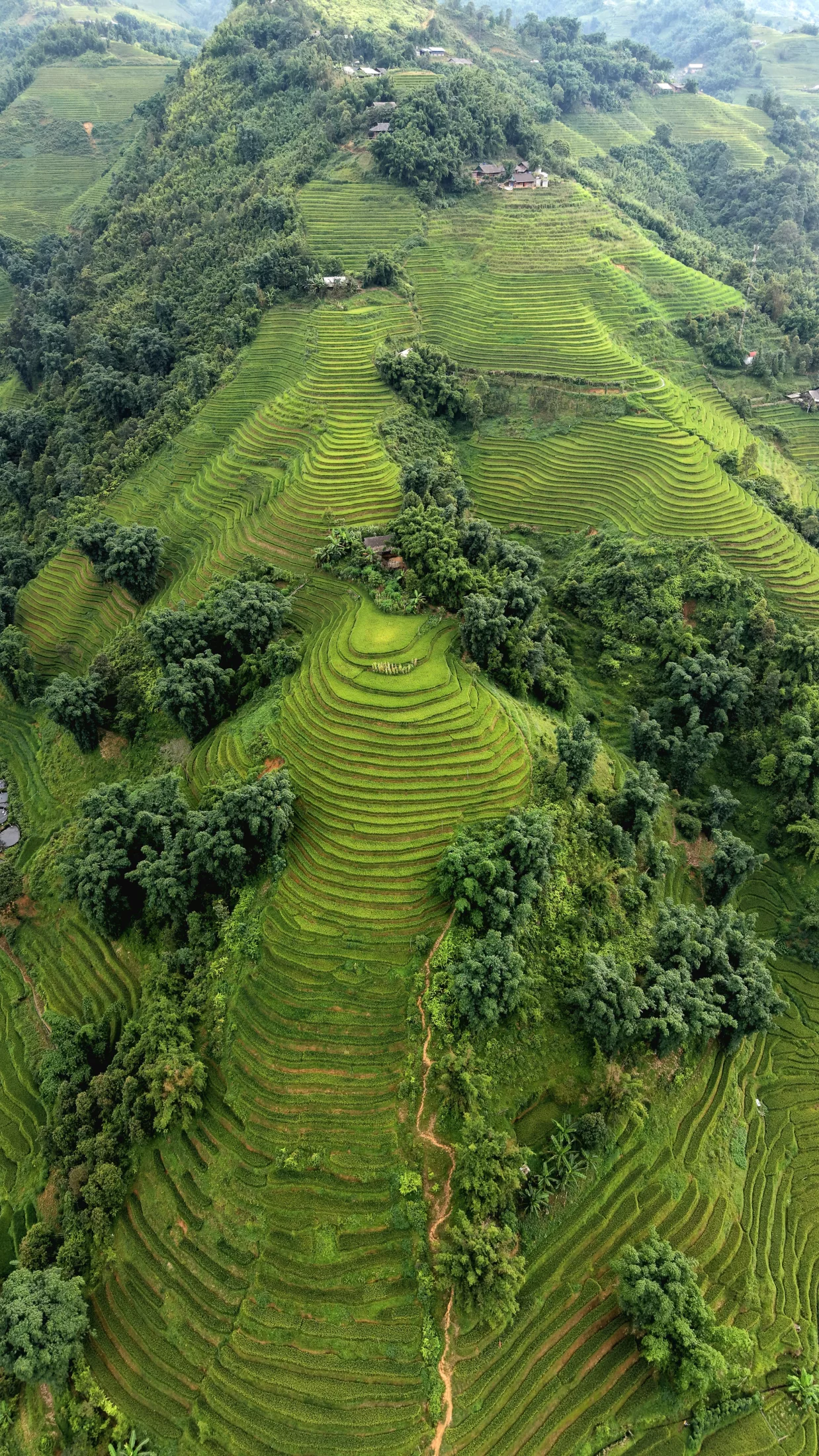
Then, in the middle of the afternoon, the sun comes out. And there, everything changes. The still wet rice fields reflect the light. The terraces draw curves on the mountains and the greens, hitherto crushed by the gray sky, appear one after the other. We return to the hotel around 6:30 p.m., after almost twenty kilometers, our shoes soaked and our legs tired. The sun is descending over the valley. Our clothes in the bedroom are probably always damp. But for once, we don't care at all.
So, Sapa or Sapaland? A bit of both. Fansipan sometimes gave us the impression of a mountain transformed into a setting. Cat Cat, that of a village transformed into an attraction. And yet, you just have to walk a few kilometers, get lost between two rice fields or wait for the rain to stop for all this to disappear. Since the start of our trip to Asia, we have seen a lot of rice fields. Those of Sapa remain among the most impressive. Perhaps even because they were so desired. We arrived wondering if the clouds were going to spoil Sapa. In the end, they mainly taught us to wait for it to reveal itself.