Discoveries
Horseshoe Lime
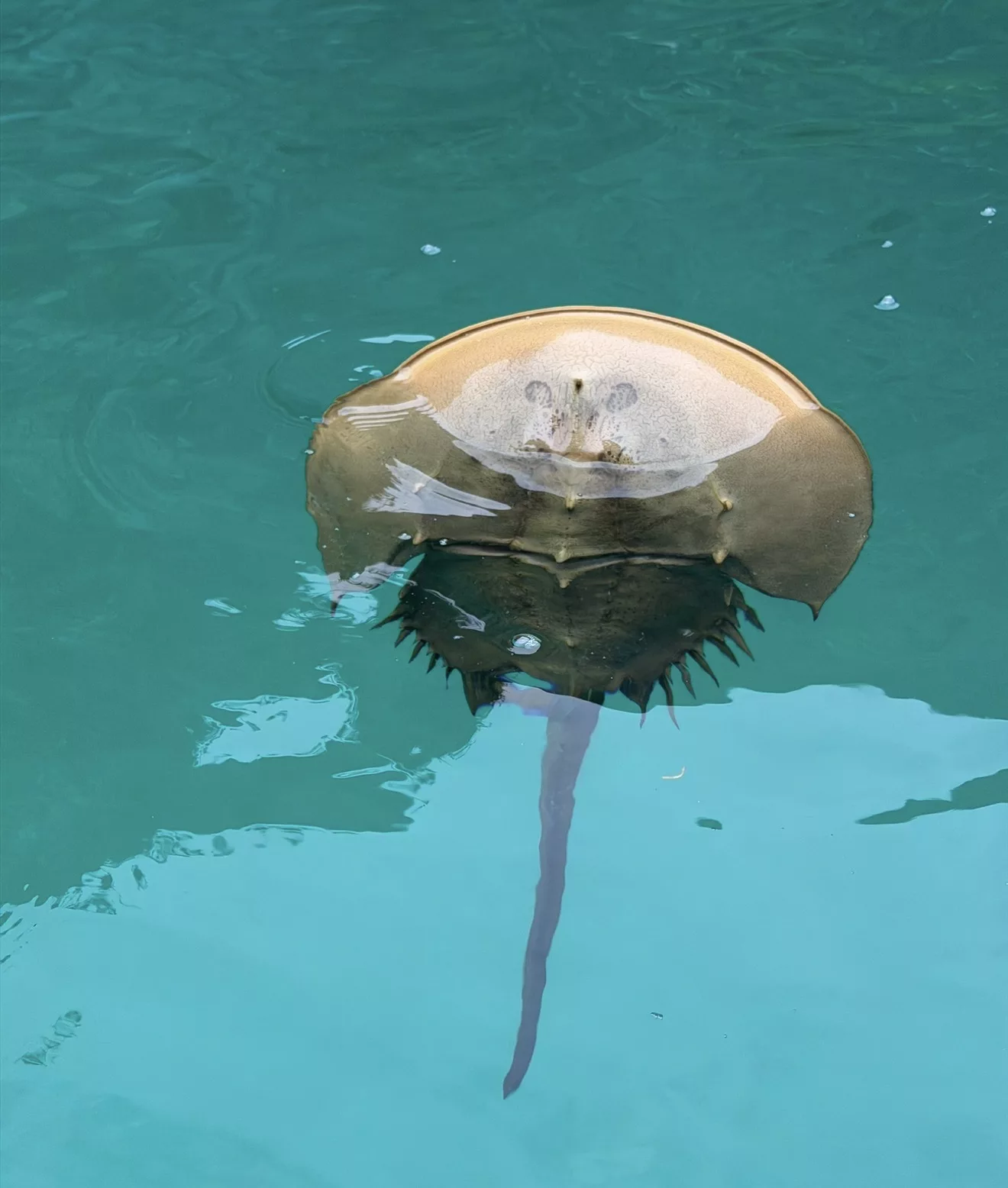
While kayaking in the Big Lagoon, we spotted what we initially thought was a coconut drifting. As we approached, surprise: it was in reality a horseshoe crab, slowly motionless near the surface. A totally unexpected encounter, and frankly impressive.
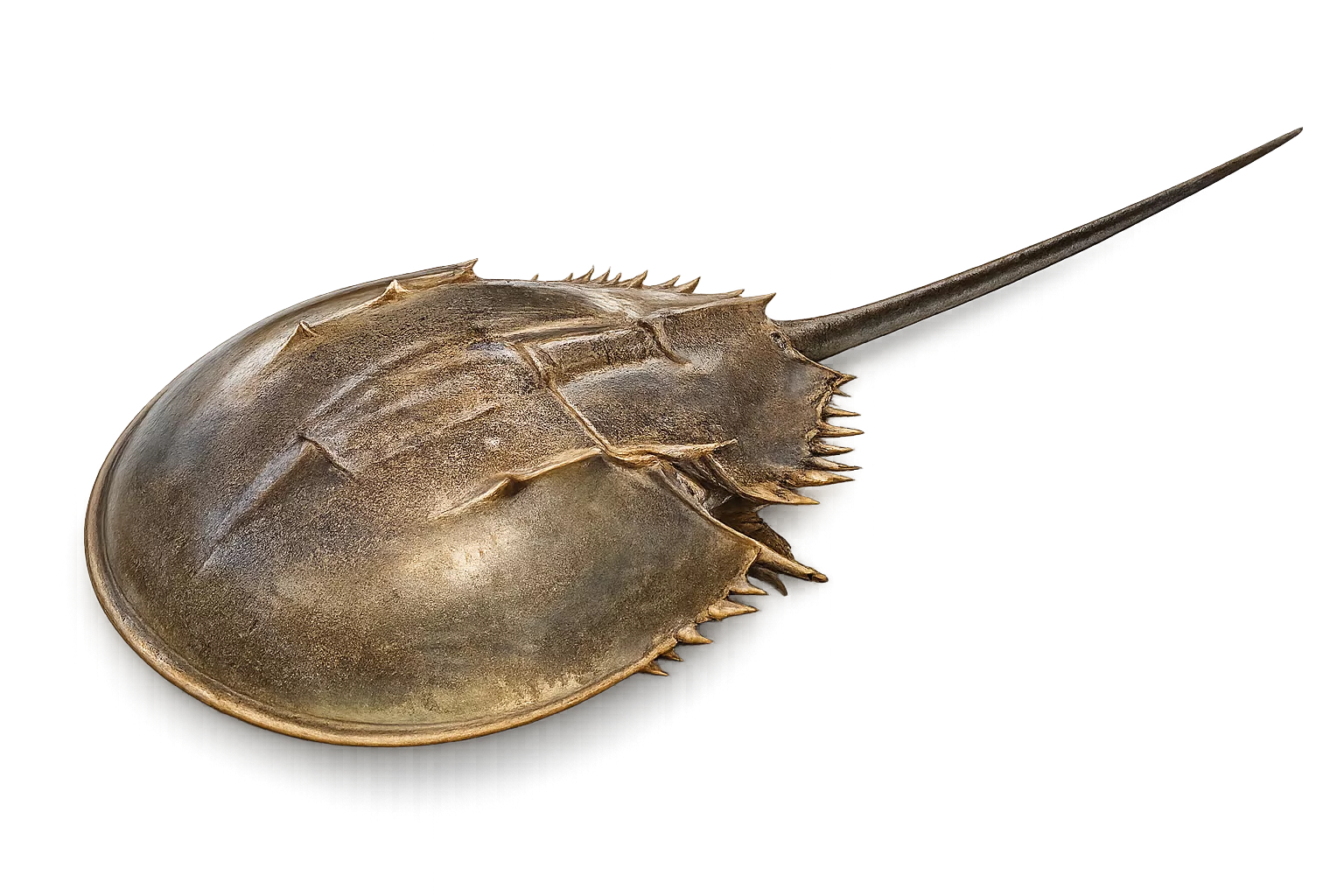
The horseshoe crab may look like a crab, but it is not one. It is actually closer to spiders and scorpions than to crustaceans. Its rounded carapace, its long caudal spine and its multiple pairs of legs hidden under its back give it an almost prehistoric appearance, and for good reason: this animal has existed almost in its current form for around 450 million years. It appeared long before the dinosaurs and survived all the great extinctions.
We understand why it is sometimes nicknamed a living fossil. It's hard not to think of a small marine dinosaur when you see it gliding gently in the shallow water, with its slow movements and its silhouette straight out of another era.
The horseshoe crab also plays a discreet but essential ecological role: its eggs feed many migratory birds, and its blue blood, sensitive to bacteria, is used in medicine to test the sterility of vaccines and medical devices.
At the time, we obviously didn’t think about any of this. We just observed this strange and quiet creature in silence, thinking that perhaps we had just encountered one of the oldest inhabitants on the planet.